
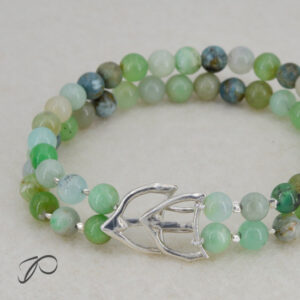
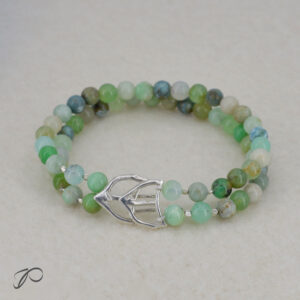
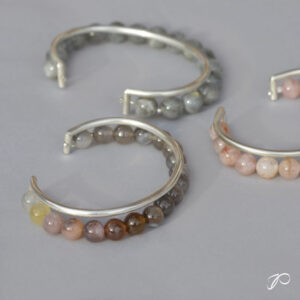
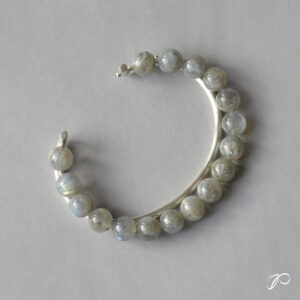
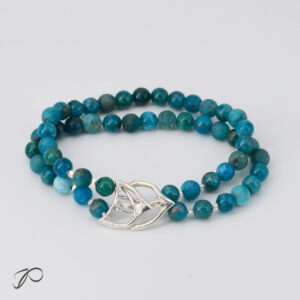
Bracelets you’ll never want to take off! From unique bangles and torques to gemstone strands with decorative clasps, and delicate designs crafted to subtly complement your earrings or necklace, I offer a wide variety of bracelets. I particularly love the elegance of this jewelry piece. Like long necklaces or dangling earrings, it follows the body’s movements. Paired with earrings, it adorns your entire look. Lastly, I pay particular attention to their design, allowing you to wear them all day without restricting your movements.
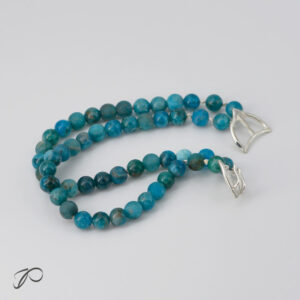
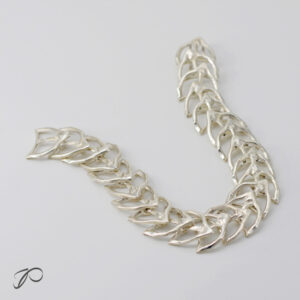
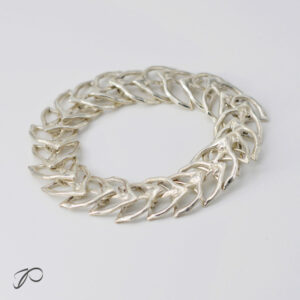
How to choose your bracelet based on your hand and wrist?
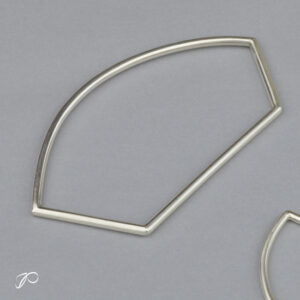
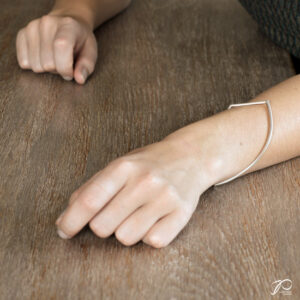
If you notice a smooth continuity between the width of your palm and your wrist, you can choose a bangle. In the right size for a comfortable fit, it will slide onto the wrist without wobbling too much, or rest at the top of the hand without getting in your way. This will be the bangle you can wear day and night!! Try the experience with the “Arc” or “Origines” bracelet.
If, on the other hand, there’s a big difference between the width of your hand and the slimness of your wrist, then it’s better to choose bracelets in the “Torques”, “Équinoxe”, or “Juin” style. They slip directly onto the wrist. In the right size, they’ll be comfortable without squeezing the wrist, and just wide enough to rest at the top of the hand. Personally, I find that very graceful. But sometimes you want to play up the bold character of this piece: in that case, choose a size closer to your wrist.
A jeweler’s work on a bangle
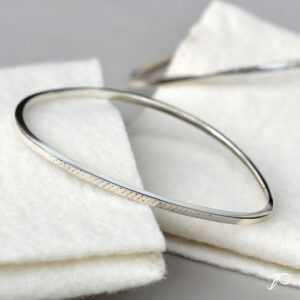
I make all the bracelets in my workshop. Here, for example, are the steps involved in making an “Origines” bangle. There are 10 of them.
- Cutting my square-section silver wire
- Shaping the overall oval
- Soldering
- Shaping and curving with a hammer on a leather stake
- Filing and sanding the outer surface
- Engraving the outer surface
- Extensive filing of both inner surfaces to round off the edge, make the bracelet comfortable to put on, and add visual softness in keeping with the oval shape of the bracelet. Finished with sanding
- Filing and sanding the top surface, taking care to keep the shape taut
- Fine sanding and polishing
- Final cleaning and brightening
All these steps are important, and as is often the case in jewelry-making and any craft trade, every step must be carried out to the highest standard. No later step can fix the mistakes of the one before it… so it all takes real concentration!
